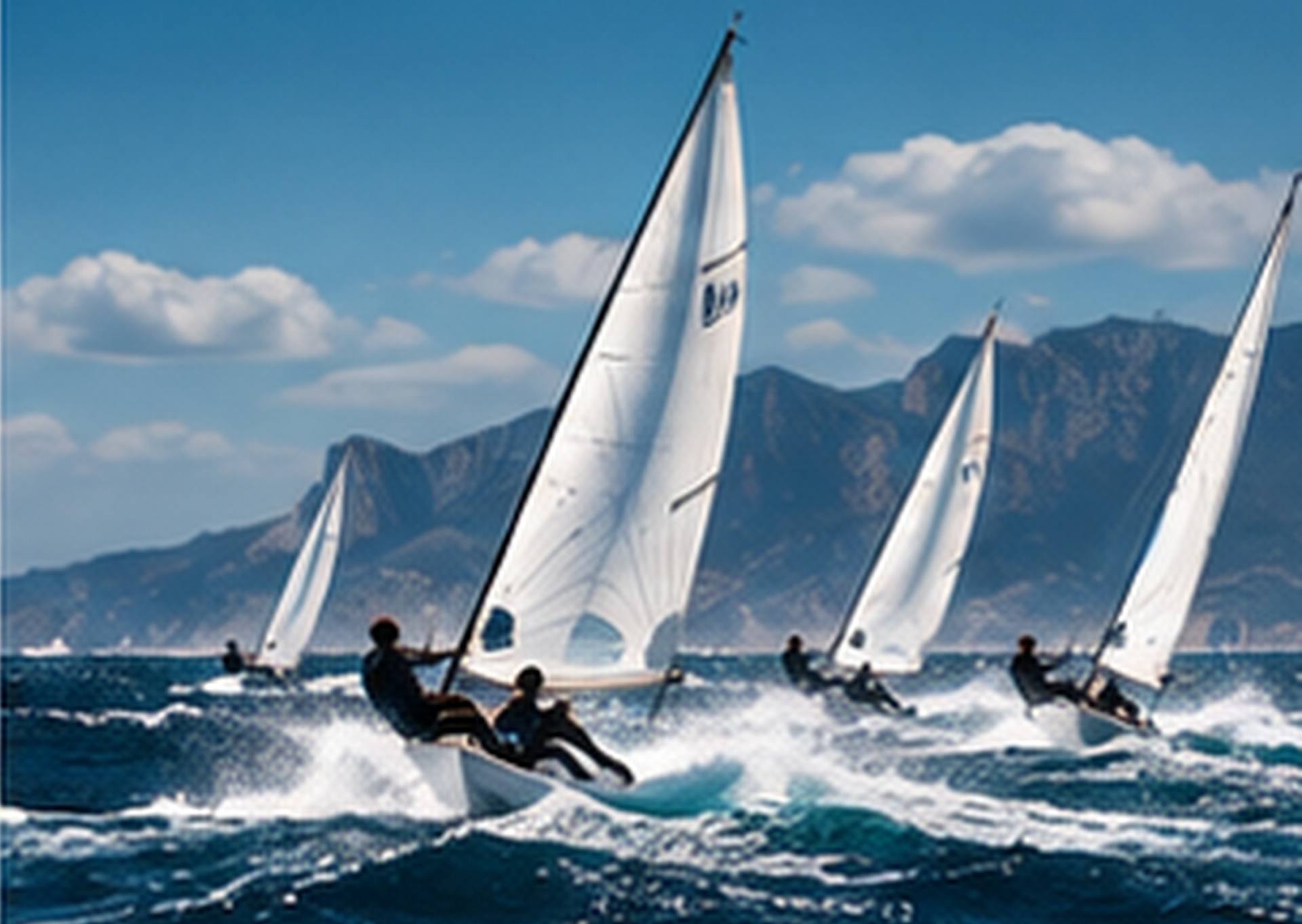
Finn
One-design class · since 1949
- Boats
- 7
- Results
- 12
- Wins
- 0
- Races
- 2
- Length
- 4.5m
- Beam
- 1.5m
- Sail area
- 10.2m²
Why sailors choose the Finn
The Finn is a heavyweight single-handed Olympic dinghy, raced at the Games from 1952 until it was dropped after Tokyo 2020, and it is known as one of the most physical and tactical boats to sail. Big sailors choose it because few dinghies suit their weight, and a very strong masters circuit keeps it alive. Without Olympic status, the class has fewer young sailors coming through.
- Very physically and tactically demanding single-hander
- Suits heavy sailors (about 90 kg and up)
- Long Olympic history, 1952 to 2021
- Large, active masters (40+) championships
- Lost Olympic status for Paris 2024, so youth pipeline weaker
Our note
Specifications
One-design class
- First built
- 1949
- Length
- 4.5m
- Beam
- 1.5m
- Sail area upwind
- 10.2m²
Single-handed dinghy; hull weight 107 kg; year is the design year
Published figures for the design; individual boats are often modified. Sources: finnclass.org
What sailors and testers say · in our words, from the linked pages
The class presents the Finn as the toughest single-hander physically and mentally, and the longest-serving Olympic dinghy since its 1949 design.
International Finn Association · International Finn Association
Losing Olympic status upset him; he sees it as the next step for big Laser sailors, while masters events often draw over 350 entries.
NZ Finn Association secretary Ray Hall, via Scuttlebutt · Scuttlebutt Sailing News, 2021
Against its rivals
The Finn against four designs like it, from published figures. Swap any of the four. Each spoke is scaled to the largest of the five; a figure that isn't published sits at the centre (— in the table).
| Design | Length | Beam | Draft | Weight | Sail area | Power (SA/D) | Boats racing | Wins |
|---|---|---|---|---|---|---|---|---|
| Finn | 4.5 m | 1.50 m | — | — | 10 m² | — | 7 | 0 |
| ILCA | 4.2 m | 1.37 m | 0.79 m | 0.1 t | — | — | 2 | 0 |
| Boat | Sail no. | Skipper or owner | Years | Results | Wins |
|---|---|---|---|---|---|
| Jorge PINHEIRO DE MELO | — | Jorge PINHEIRO DE MELO | 2022–2026 | 4 | — |
| Francisco PINHEIRO DE MELO | — | Francisco PINHEIRO DE MELO | 2024–2025 | 2 | — |
| Francisco PINHEIRO MELO | — | Francisco PINHEIRO MELO | 2023–2024 | 2 | — |
| Carlos AZEVEDO | — | Carlos AZEVEDO | 2026 | 1 | — |
| Fernando BELLO | — | Fernando BELLO | 2023 | 1 | — |
| FINNECA | — | Fernando BUSTORFF BELLO | 2022 | 1 | — |
| Miguel MAYA | — | Miguel MAYA | 2024 | 1 | — |
| Race | Results of this design | Wins | Years |
|---|---|---|---|
| Cascais Vela | 8 | — | 2022, 2023, 2024, 2026 |
| Mirpuri Foundation Sailing Trophy | 4 | — | 2023, 2024, 2025 |